
Sarasota County Previous-Resident Sources
One Sarasota County address can pass through several record eras. Current parcel data gives the legal land key. The online deed index reaches back to 1990, while the Clerk holds Sarasota County Official Records from the county's creation in 1921. Earlier land evidence may belong in Manatee County. Polk directories, the federal census, permits, maps, newspapers, probate files, and obituaries add occupants and events that a deed cannot show.
| Source | Years it covers | Where held | What it shows |
|---|---|---|---|
| Official Records web index | 1990 to present | Sarasota County Clerk | Title parties, instruments, dates, deed images |
| Earlier county deed series | 1921 to 1989 | Clerk Public Access | Owners and legal descriptions on microfilm or electronic records |
| Pre-county land books | Before 1921 | Manatee County records | Earlier Sarasota-area land transfers |
| R.L. Polk directories | Verified years from 1918 to 1999, uneven | History Center and State Library | Listed occupants, spouses, work, vacancy, address |
| Federal census | Through 1950 under the 72-year rule | NARA and library databases | Households, ages, relationships, and occupation |
| Permits and maps | Varies by place and source | Municipal or county office; History Center | Structure dates, work, footprints, address continuity |
Start with the newest source that securely identifies the parcel. Then move backward one transfer or one dated volume at a time. A recent home may depend on deeds and permits. An older Sarasota address can benefit from Polk volumes, Sanborn sheets, newspapers, and census schedules. The same street label may point to the wrong jurisdiction or a changed number, so keep the legal description in view.
Start Sarasota County Address Records
The Sarasota County Property Appraiser supplies the current parcel key. Record the owner name exactly, the situs and mailing addresses, parcel ID, municipality or tax district, subdivision, legal description, year built, and sales references. A parcel is a mapped unit of land. The legal description identifies that land in title records even if a street number changes. The owner entry is assessment evidence, not proof that all previous residents owned or occupied the property.
Compare the owner mailing address with the situs. A match and a homestead indicator support, but do not prove, owner occupancy. A mismatch may reflect seasonal use, a trust, an entity, or a mailing agent. Save the assessment tax year and transfer date. Sarasota County's rapid growth and seasonal ownership make date labels especially important when accounts disagree.
Walk Sarasota County Deeds Backward
The chain of title is the sequence of recorded transfers for the same land. Start with the current assessed owner and locate that owner's purchase deed in the Clerk Official Records index. The grantee is the party receiving an interest, and the grantor is the party conveying it. Open the image, confirm the legal description, and record both names, filing date, instrument number, and any book and page.
- Copy the current parcel ID, assessed owner, legal description, and latest sale clue from the Property Appraiser.
- Search that owner as grantee, narrow to deed types and a useful date range, then confirm the parcel in the image.
- Take the seller's name from the verified deed. Search that seller as a grantee to find the earlier acquisition.
- Repeat one deed at a time. Note name variants, spouse wording, entity names, and legal-description changes.
- At the 1990 web cutoff, request earlier Sarasota County books from Public Access. Before 1921, test Manatee County.
- Grantor and grantee
- The grantor transfers an interest; the grantee receives it.
- Chain of title
- The linked sequence of transfers affecting the same land.
- Legal description
- The lot, block, subdivision, or metes-and-bounds wording that persists beyond a mailing address.
Official Records search fields include last or business name, first name, instrument number, filing dates, book and page, and document type. Results stop at the top 500, so narrow common names by date and deed type. Book and page search is especially useful for 1990 through 1998. A deed establishes a recorded transfer, not that every named party lived there.
Cross Sarasota County Record Cutoffs
The gap between online coverage and office custody is a major Sarasota County research quirk. The permanent web deed index starts January 1, 1990, but the Clerk's local Official Records run begins in 1921. A failed pre-1990 web search does not mean the deed was lost. Public Access can inspect or retrieve earlier electronic and microfilm records, and the Clerk's Record Search Request form accepts names, instruments, books, pages, years, and other identifying facts.
An office search costs $2 per name per year. Plain copies are $1 per page, certification is $2 per document plus page charges, and inactive material may require storage retrieval. No exact turnaround is promised. The Clerk can be reached at 941-861-7400, option 5 then 1, for Public Access. Sarasota County did not exist before 1921, so older deeds, court matters, probate, and administrative records may be filed under Manatee County. This is a jurisdiction shift, not evidence of a courthouse fire or destroyed series.
Search tip. Treat 1990 and 1921 as handoff points, then keep following the same legal description through the correct custodian.
Keep Sarasota County Addresses Continuous
A street number is a weak historical key when a road was renamed, renumbered, extended, or placed in a new subdivision. Compare the deed's legal description with recorded plats and Property Appraiser data. A plat is the recorded map of lots, blocks, and streets. Sanborn fire-insurance maps can add building footprints and construction context. Official Sarasota material confirms useful Sanborn years including 1913, 1925, 1929, and 1940.
The History Center's early maps, aerial photographs, A-Z reference file, city directories, and newspapers can bridge an address change that general web searching misses. Some archives are stored offsite, so staff ask for at least three business days to pull material. The current temporary research location is at Osprey Library, 337 N Tamiami Trail, with weekday and Saturday hours. Verify the parcel's municipality too, since Sarasota, Venice, North Port, Longboat Key, and unincorporated county areas keep separate permit and addressing records.
One Sarasota County House Trail
A documented run at 518 Adelia Avenue shows why consecutive sources matter. The 1926 Polk directory lists James E. Moore and wife Lottie. In 1928 it lists Donald McCarthy, Maurice McCarthy, and Maude McCarthy, with occupations or employer ties. The 1930 volume marks the house vacant. In 1936 the surname appears as Cooper, while 1938, 1940, 1945, and 1947 use Cripper. The series makes the one-year spelling look like a directory or typesetting error.
Previous residents should never be rejected because one index differs by a few letters. Search phonetic variants, initials, spouse names, occupations, and the same address in the next available year. A directory's vacancy mark is also dated evidence, not proof that no one was present for the whole year. This Sarasota example links named occupants, a vacancy, and work facts while warning against blind trust in one transcription.
Date Sarasota County Home Records
Deeds date title events, not necessarily the building. Compare the parcel's year-built field with permits, Sanborn footprints, plats, aerials, and directory appearances. The City of Sarasota permit search includes owner, contractor, street, parcel, and postal code fields, but warns that some residential records before 1997 are absent. Sarasota County's permit search covers address, parcel, permit number, dates, and type for unincorporated property. Venice, North Port, and Longboat Key require their own municipal routes.
A permit applicant or contractor is not automatically a past resident. Use the work date to explain a new structure, addition, demolition, or rebuild. Then check whether a directory entry or census household appears at the address after that event. Hurricane recovery can produce dense permit trails, yet those project records still need a separate occupancy source.
Find Sarasota County Previous Residents
Owners are only one layer. A Polk street or reverse section, where present, orders entries by address and can name listed adults or businesses. The alphabetical entry may add a spouse, occupation, employer, widow notation, or abbreviation. The verified Sarasota run is uneven, with cited volumes from 1918 through 1999 rather than one book for every year. Confirm an exact year and reverse section with History Center staff. The collections themselves are described on the Sarasota County city directory page.
Federal census schedules add household relationships, ages, birthplaces, and occupations. Under the 72-year rule, 1950 is the newest public census. The 1920 census predates Sarasota County, while the 1930 census and later public schedules can be searched under the newer county. Pairing a census year with directories just before and after it can identify arrival, departure, a name variant, or a household missed by one volume.
- Confirm the historic address with a plat, map, or legal description.
- Find the address in the nearest available directory street section, then open each named person's alphabetical entry.
- Locate the address in the nearest public census using street, cross streets, names, and enumeration geography.
- Compare ages, relationships, occupations, and name variants, then test the directories on both sides of the census year.
When a person disappears, search local newspapers, obituaries, cemetery material, and ClerkNet probate records. An obituary can identify survivors and former places, while a probate file can explain a title transfer after death. Neither should be forced to fit the address without a matching name and date.
Lawful use. Research previous residents for house history, genealogy, estates, and personal curiosity. Never use a record trail to harass, threaten, or track a living person.
Confirm Sarasota County Resident Endpoints
Later records can help distinguish people with the same name, but they answer different questions from deeds and directories. The Florida vital-records hub explains access to statewide birth, death, marriage, and dissolution certifications.
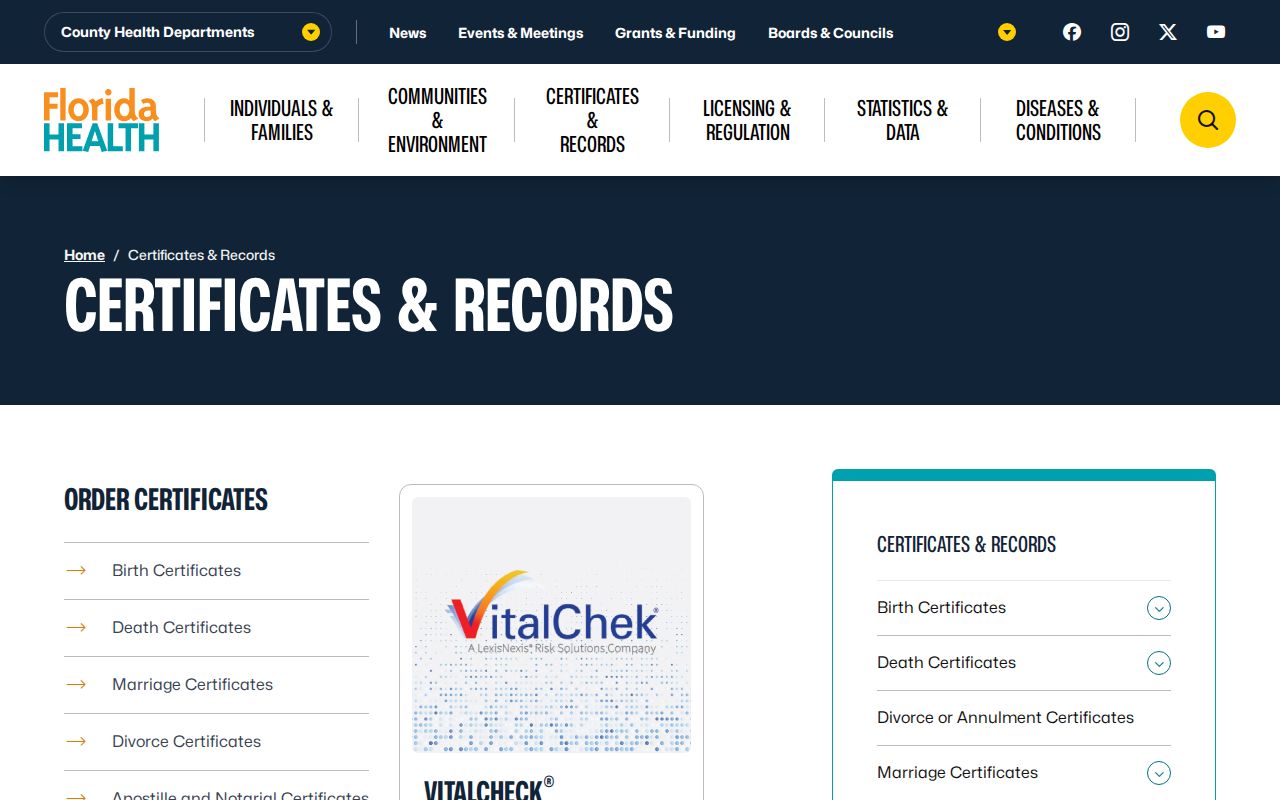
Birth records less than 125 years old are confidential, and cause of death is protected for 50 years. Public marriage and dissolution abstracts begin June 6, 1927; earlier marriage licenses remain with the county Clerk.
The Florida birth-certificate page sets out eligibility, identification, and order channels rather than offering a public name index.
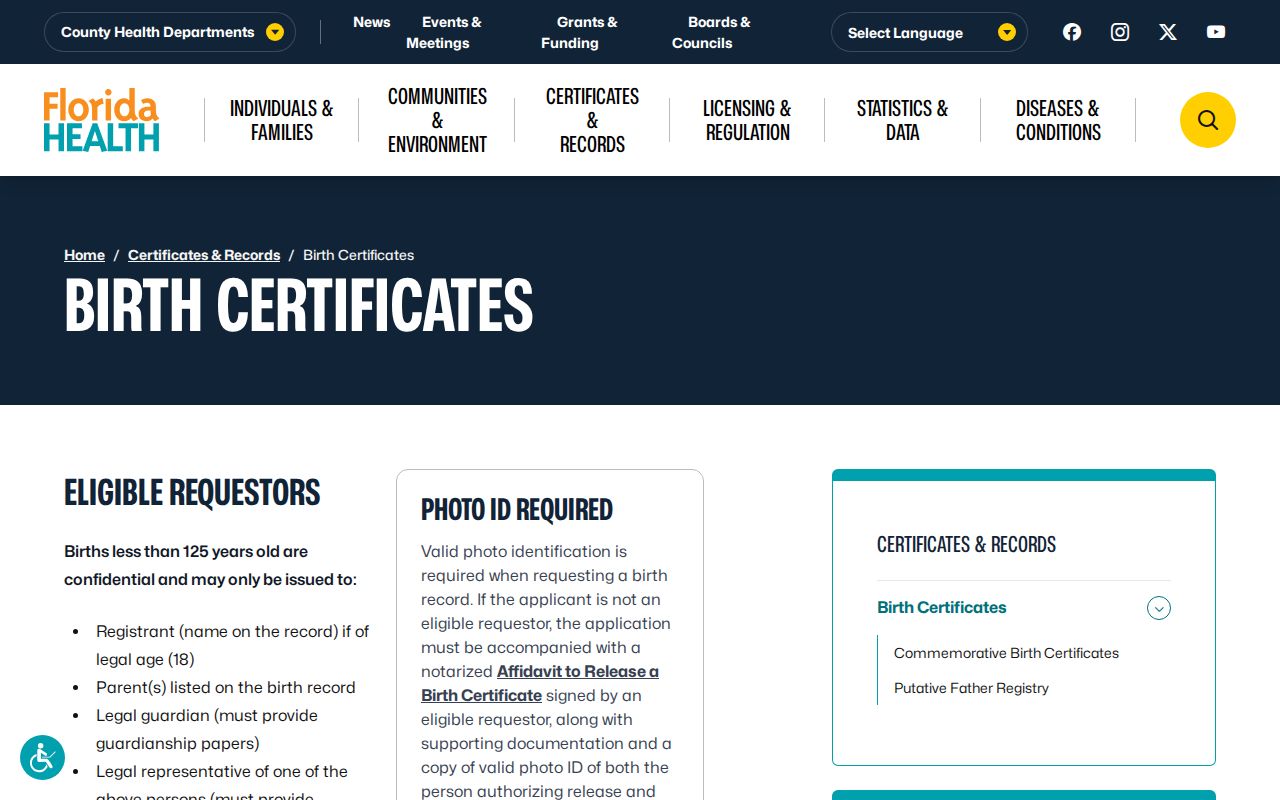
Use a certificate only when eligibility and the research purpose fit. A restricted vital record is never a shortcut around the public deed, directory, census, obituary, or probate trail.
The Florida Department of Corrections Offender Search can confirm a dated state custody or supervision record by name or DC number.
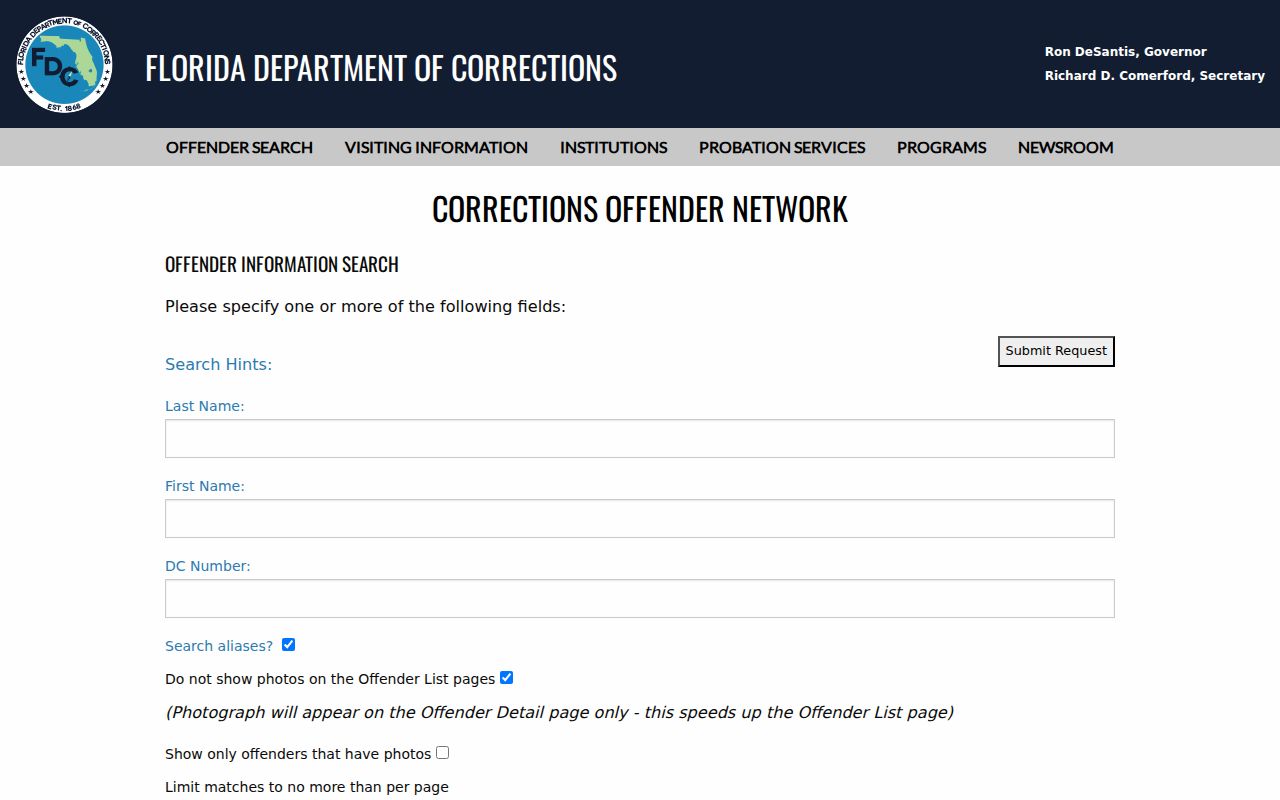
A corrections entry documents its own custody or supervision facts; it does not establish that the person lived at a particular Sarasota address before or after those dates.
For the registry's limited statutory purpose, the FDLE Sexual Offenders and Predators Search offers name and geographic modes.
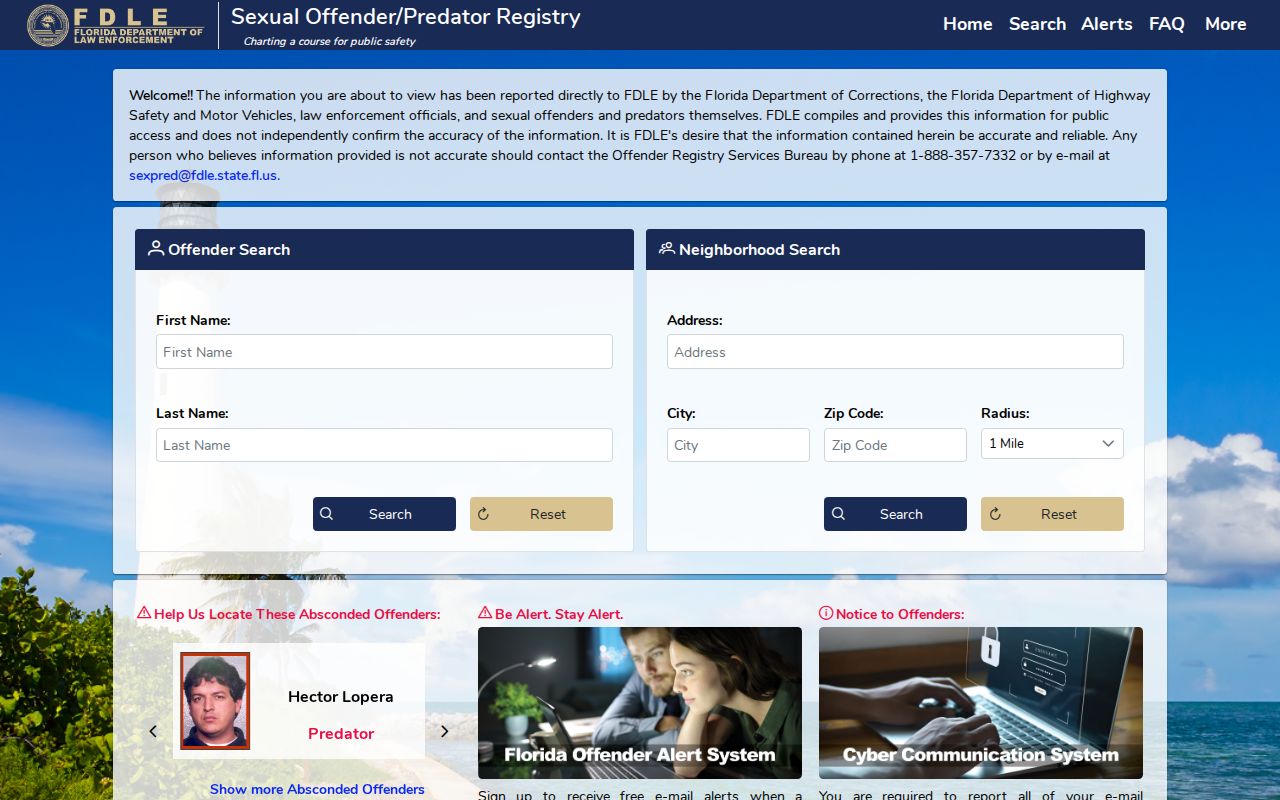
Registry addresses are reported compliance information, not a substitute for deed or directory evidence, and the information must never be used to contact or harass a listed person.
The Sarasota County Sheriff's arrest and inmate search is the local source for booking and custody information.
A booking record is not a conviction or a residence history. Compare any relevant date and identity details with the Clerk's filed case and keep it separate from the address chain.